
The legality of IPTV services in the UK is a complex issue that requires careful consideration. While IPTV technology itself is legal, the providers of these services may operate in a legal grey area.
Some IPTV services, such as Fubo TV and Sling TV, are verified official services that offer licensed content. However, there are unverified services that distribute TV channels without proper licensing, potentially infringing on copyright laws.
Understanding the Digital Economy Act 2017 is crucial for UK residents, as it imposes stricter penalties for copyright infringement related to streaming services.
Key Takeaways
- Distinguish between legitimate IPTV services and unauthorised providers.
- Understand the implications of the Digital Economy Act 2017.
- Identify trustworthy IPTV providers that offer properly licensed content.
- Be aware of the risks associated with using unverified IPTV services.
- Make informed decisions about IPTV services, balancing quality and legality.
Understanding IPTV Technology
IPTV technology has revolutionized the way we consume television content, offering a range of IPTV services that cater to diverse viewer preferences. This shift has been driven by the increasing demand for more flexible and personalized viewing experiences.
What Is IPTV and How Does It Work?
IPTV, or Internet Protocol Television, is a service that delivers television content over the internet, rather than through traditional satellite or cable formats. This technology allows for a more streamlined and customizable viewing experience, as users can access content on-demand and on a variety of devices. For those interested in exploring legal IPTV options, visiting https://www.iptvvuk.com/iptvuk/ can provide valuable insights into the available services.
Types of IPTV Services Available
The IPTV market encompasses several distinct service providers and platforms, each offering different content and viewing experiences. Some of the key types include:
- Subscription-based services like Fubo TV and YouTube TV, which offer licensed content and represent fully legitimate IPTV services.
- Free IPTV services that operate through ad-supported models, though their adherence to licensing requirements can vary significantly.
- Hybrid models that combine subscription tiers with ad-supported options, offering different levels of content access based on payment.
Understanding these different options and platforms is crucial for consumers looking to navigate the IPTV landscape effectively.
Is IPTV Legal in UK? The Legal Framework
Understanding the legal framework surrounding IPTV in the UK is crucial for both providers and users. The legality of IPTV services hinges on compliance with various laws, particularly those related to copyright infringement.

The Digital Economy Act 2017
The Digital Economy Act 2017 is a significant piece of legislation that impacts the operation of IPTV services in the UK. This act aims to combat online copyright infringement, among other objectives. It empowers authorities to take action against illegal streaming and downloading activities. Specifically, it allows for the blocking of websites that facilitate copyright infringement, directly affecting how IPTV providers operate.
Under this act, copyright holders can take action against infringing sites, and internet service providers (ISPs) are required to block access to these sites. This legislation has been used to target illegal IPTV services that stream copyrighted content without permission.
Copyright Infringement Penalties
The UK has stringent penalties for copyright infringement, which apply to illegal IPTV operations. Those found guilty of providing or using illegal IPTV services can face significant fines and even imprisonment. The law distinguishes between individual users and commercial providers, with the latter facing more severe penalties.
Recent enforcement actions demonstrate the seriousness with which authorities view these offenses. For instance, four individuals were arrested in March 2023 during a nationwide crackdown on illegal streaming. The Police Intellectual Property Crime Unit, working with industry partners, carried out these raids, highlighting the collaborative effort to combat illegal IPTV activities. Furthermore, users of illegal IPTV services have received mass warnings, threatening legal action if they continue to use these services.
These actions underscore the importance of choosing legal IPTV services to avoid potential legal consequences. As the enforcement landscape evolves, understanding the legal framework becomes increasingly crucial for all parties involved.
Legal vs. Illegal IPTV: How to Tell the Difference
Understanding what makes an IPTV service legal or illegal is crucial for consumers who want to avoid potential risks. With the increasing popularity of IPTV, distinguishing between legitimate providers and illegal ones has become more important than ever.
Characteristics of Legal IPTV Services
Legal IPTV services typically have certain characteristics that set them apart from their illegal counterparts. These include:
- Offering content that is licensed and compliant with copyright laws.
- Providing a clear and transparent price structure.
- Having a robust customer support system in place.
- Being available through official app stores or having a well-documented website.
Most legal IPTV providers offer limited content due to licensing agreements. They don’t claim to provide everything, and their price reflects the quality and quantity of the content they offer.

Red Flags of Illegal IPTV Providers
On the other hand, illegal IPTV services often exhibit several red flags. These include:
- Offering all premium channels at a price that seems too good to be true.
- Requesting payments via cryptocurrencies or other untraceable methods.
- Providing low-quality content due to unauthorized distribution.
- Being riddled with ads and pop-ups.
- Lacking reliable customer support and having unclear privacy policy details.
- Requiring sideloading of applications or downloads from unofficial sources.
By being aware of these characteristics, you can make informed decisions when choosing an IPTV service. Always be cautious of providers that seem too good to be true or lack transparency in their offerings and operations.
Risks of Using Unauthorised IPTV Services
Using unauthorised IPTV services can expose you to significant risks. When you opt for an IPTV service that operates outside the law, you’re not just breaking rules; you’re potentially putting your personal and financial information at risk.
Legal Consequences for UK Users
UK users of unauthorised IPTV services face legal consequences. The Digital Economy Act 2017 makes it an offence to stream or download copyrighted content without permission. If caught, you could be subject to fines or even prosecution.
Moreover, using illegal IPTV services can lead to your credit card details being compromised. When you provide your payment information to unregulated services, you have no guarantee that it won’t be shared with third parties or used for fraudulent activities.
Security and Privacy Concerns
Unauthorised IPTV services often lack standard security protocols, making your personal data vulnerable. These services may harvest excessive personal data, including viewing habits and device information, which can be sold to third parties or used for targeted scams.
- Malware distribution is another significant risk, with some illegal IPTV applications containing trojans or ransomware that can compromise your device’s security.
- Your financial details are at risk when dealing with unregulated service providers that may store credit card information insecurely.
- The true cost of “cheap” IPTV service often includes significant privacy and security compromises.
To protect yourself, it’s essential to choose a reputable and legal IPTV provider. By doing so, you can enjoy your favourite content while safeguarding your personal and financial information.
Top Legal IPTV Services in the UK

The landscape of legal IPTV services in the UK is diverse and expanding. With numerous options available, viewers can choose from a range of services that cater to their entertainment needs. In this section, we will explore the top legal IPTV services available in the UK, focusing on their unique features and benefits.
Premium Streaming Services
Premium streaming services offer high-quality content, including sports, movies, and TV shows. Services like Sling TV and Vidgo provide a range of channels and on-demand content. Sling TV, for instance, offers various plans, including Sling Orange and Sling Blue, starting at $40 and $45 per month, respectively. You can also opt for the Sling Orange + Blue plan for $60 monthly. Vidgo, on the other hand, offers access to over 95 channels for $55 per month.
These IPTV services are popular among cord-cutters who seek flexibility and affordability. They offer a range of channel add-on bundles, allowing viewers to customize their viewing experience. For more information on the best IPTV providers, you can visit Barchart’s article on top IPTV providers.
Broadcast-Backed IPTV Platforms
Broadcast-backed IPTV platforms are services developed by established television networks and media companies. These platforms offer their content through internet-based delivery systems, providing viewers with a range of options. In the UK, BBC iPlayer stands out as a premier broadcast-backed platform, offering licence fee payers free access to live BBC channels and an extensive on-demand library.
Other notable broadcast-backed platforms in the UK include ITV Hub, Channel 4’s All 4, and My5. These services offer both live streaming and catch-up content from their respective networks. For more insights into IPTV suppliers, you can check IPTV UK’s list of IPTV suppliers. To understand the legal implications of using IPTV services, visit Firestick Tricks’ article on IPTV legality.
These platforms maintain direct control over their content libraries and distribution infrastructure, differing from third-party aggregators. They are increasingly collaborating through initiatives like Freeview Play to provide integrated experiences that combine multiple broadcasters’ content.
IPTV Laws Around the World: A Comparison
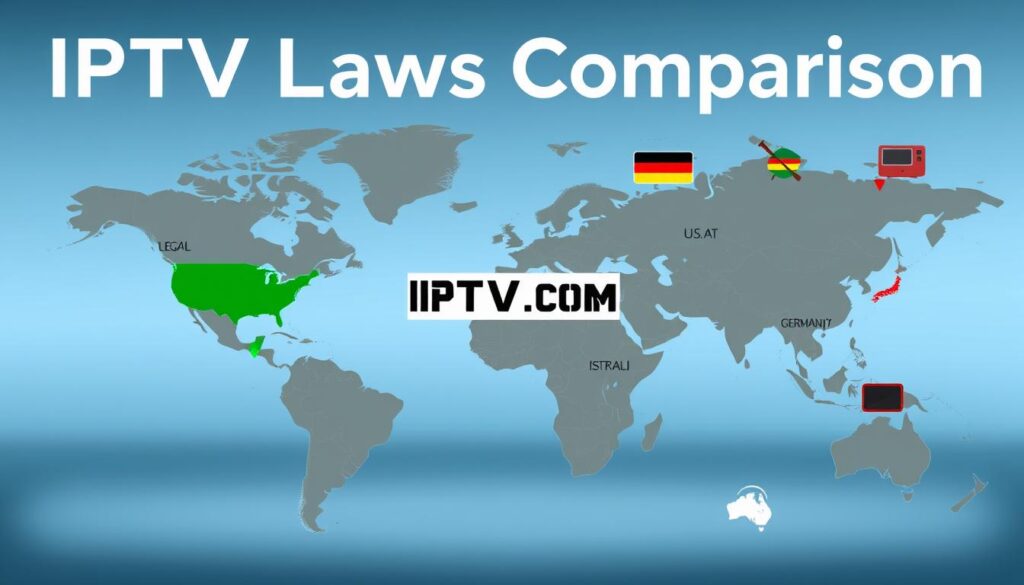
IPTV laws and regulations differ widely around the world, reflecting local copyright policies and enforcement practices. As the IPTV service market continues to expand, understanding these legal differences becomes increasingly important for both providers and users.
European Union Regulations
The European Union has implemented various directives to regulate IPTV services across member states. For instance, the Copyright Directive aims to harmonize copyright laws, making it easier for providers to operate across borders. However, enforcement remains the responsibility of individual member states, leading to some variation in practice.
United States Legislation
In the United States, IPTV is subject to federal copyright law, with specific legislation addressing signal theft and copyright infringement. The country has seen significant cases against illegal IPTV providers, resulting in substantial fines and penalties. Users found guilty of violating these laws may face fines, although the focus is typically on the service providers rather than individual users.
Global Enforcement Trends
Global enforcement against illegal IPTV services has intensified, with international cooperation becoming more common. For example, Canada implemented a system in 2015 allowing copyright holders to send warning notices to suspected users of illegal IPTVs through their ISPs, although the practice of demanding cash settlements was later discontinued due to criticism. There’s a trend towards holding providers primarily accountable, representing a strategic shift in enforcement priorities globally. According to a report by the OECD, international cooperation and treaties are facilitating coordinated action against IPTV services operating across multiple jurisdictions.
As the IPTV landscape continues to evolve, it’s crucial for users and providers to stay informed about the legal requirements in their country or region. By understanding these regulations, stakeholders can better navigate the complex legal environment surrounding IPTV.
Safety Measures for IPTV Users
As you navigate the world of IPTV, it’s essential to prioritise your safety and security online. Using IPTV services can expose you to various risks, including data theft and financial fraud. To mitigate these risks, it’s crucial to take proactive measures to protect yourself.
Using VPNs with IPTV Services
One effective way to enhance your security while using IPTV is by employing a Virtual Private Network (VPN). A VPN encrypts your internet traffic, making it more difficult for third parties to intercept your data. When selecting a VPN for IPTV, consider factors such as server speed, encryption protocols, and compatibility with your devices. You can find more information on the dangers of illegal IPTV services and how to protect yourself.
Protecting Your Personal and Financial Information
When subscribing to an IPTV service, it’s vital to be cautious with your personal and financial information. We recommend using virtual credit cards or prepaid payment options to limit potential financial exposure. Be sure to critically evaluate the privacy policies and terms of service before providing any personal data. Understanding the permission requirements for IPTV apps can also help you identify potential privacy concerns.
To further safeguard your identity, consider compartmentalising your digital presence by using dedicated email addresses and minimising personal information sharing. By taking these precautions, you can significantly reduce the risks associated with using IPTV services.
Conclusion
As we conclude our exploration of IPTV legality in the UK, it’s clear that making informed choices is crucial. The IPTV landscape is complex, with both legal and illegal IPTV services available.
Navigating this landscape requires balancing entertainment needs with legal compliance, personal security, and ethical content consumption. The Digital Economy Act 2017 has significantly strengthened copyright protection in the UK, creating substantial legal risks for those using unauthorised IPTV services.
You now understand the key indicators that distinguish legitimate providers from those operating outside legal frameworks. By choosing legitimate IPTV services, you not only avoid legal and security risks but also support the sustainable creation of quality content through proper compensation to creators and distributors.
While legitimate service options may seem more expensive initially, their true value becomes apparent when considering the hidden costs of illegal alternatives in terms of legal risk, security vulnerabilities, and inconsistent quality. As the IPTV market continues to evolve, staying informed about legal developments and service offerings will help you maximise your entertainment options while remaining within the boundaries of UK law.
For more information on the legal framework surrounding IPTV, you can refer to the Council of Europe’s report on the matter. This resource provides valuable insights into the international perspective on IPTV legality and copyright protection.