

Internet Protocol Television (IPTV) represents a significant shift in how television content is delivered, using internet protocols rather than traditional broadcast methods. IPTV services are typically sold and operated by telecom providers, offering live television streamed over the internet alongside video on demand services.
Unlike regular streaming services, IPTV operates on managed, private networks that ensure consistent quality. This technology enables a two-way interactive experience, allowing for features like video-on-demand and interactive program guides.
Key Takeaways
- IPTV delivers television content over internet protocol networks.
- It offers live television and video on demand services.
- Operates on private networks for consistent quality.
- Enables interactive features like video-on-demand.
- Requires specific infrastructure components.
What is IPTV? The Complete Definition of IPTV
Understanding IPTV requires delving into its core definition and the technological advancements it brings to television viewing. IPTV, or Internet Protocol Television, is a system that delivers television services using the Internet Protocol over a packet-switched network, such as a LAN or the internet.
Official Definitions by Industry Standards
The Alliance for Telecommunications Industry Solutions (ATIS) IPTV Exploratory Group provided a definition of IPTV in 2005, relating to the telecommunications industry. According to ATIS, IPTV is defined as “the secure and reliable delivery to subscribers of entertainment video and related services” across networks that employ the IP protocol. This definition emphasizes the importance of security, reliability, and the use of Internet Protocol in delivering television services.
Industry standards highlight that IPTV operates over a managed network infrastructure, ensuring quality of service, security, and reliability. This distinguishes IPTV from over-the-top (OTT) services that use the public internet. The ATIS definition underscores the significance of a secure and reliable delivery mechanism for IPTV services.
How IPTV Differs from Traditional Television
IPTV differs significantly from traditional television in how content is delivered and consumed. Unlike traditional television broadcasting, where all content is delivered simultaneously and viewers tune into a particular channel, IPTV services send only the requested content to the specific viewer who requests it. This approach enables two-way communication, allowing for interactive features, personalized content, and on-demand viewing.
Traditional television operates on a one-way broadcast model with fixed schedules, whereas IPTV offers flexibility and customization. The key technical difference lies in how content is transmitted: cable and satellite systems send all channels simultaneously through the cable, whereas IPTV sends only the channel you’re watching, thus conserving bandwidth. As noted by industry experts,
“IPTV’s ability to deliver content on-demand marks a significant shift in viewer behavior and expectations.”
The distinction between IPTV and traditional television is not just technical; it also impacts the viewer experience. IPTV’s on-demand nature and interactive features provide a more engaging and personalized experience compared to traditional television’s linear programming.
The Evolution and History of IPTV
In the mid-1990s, the term IPTV first appeared, marking the beginning of a new era in television broadcasting. The concept of IPTV evolved significantly over the years, starting from its inception with the development of internet video products.
Early Development
The early development of IPTV can be traced back to 1995 when Precept Software developed an internet video product called IP/TV. This product was an Mbone compatible Windows and Unix-based application that transmitted single and multi-source audio and video traffic, ranging from low to DVD quality. The software was written primarily by Steve Casner, Karl Auerbach, and Cha Chee Kuan. Initially, IPTV faced significant technical challenges due to bandwidth limitations. However, two critical technological breakthroughs made IPTV viable: motion-compensated DCT video compression and ADSL technology.
Key Milestones
Several key milestones mark the adoption of IPTV globally. In 1998, TeleChoice by US West launched the first commercial IPTV service in the United States using VDSL technology. In Europe, Kingston Communications pioneered commercial IPTV services with their Kingston Interactive Television (KIT) in 1999. The 2000s saw rapid global expansion with various telecom companies launching IPTV services. By 2010, major telecommunications companies worldwide had embraced IPTV, offering comprehensive services bundled with internet and telephone offerings.
The global expansion included NBTel (now Bell Aliant) launching the first commercial IPTV over DSL in Canada in 1999, followed by SaskTel in 2002, and Sweden’s Bredbandsbolaget in 2005. These milestones highlight the rapid growth and adoption of IPTV technology across different regions.
How IPTV Works: Technical Architecture
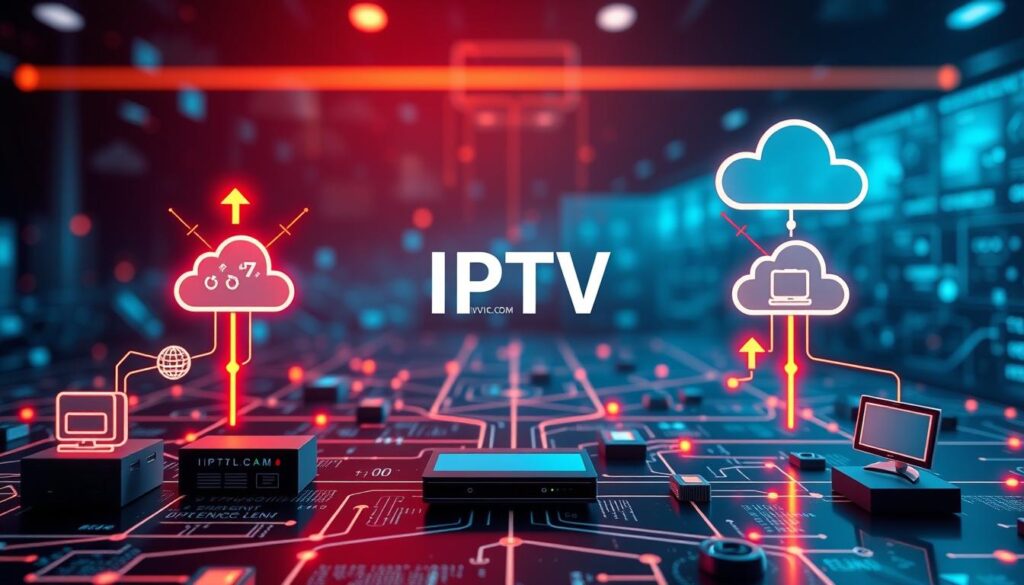
The technical architecture of IPTV is designed to optimise video content delivery over IP networks. At its core, IPTV is a method of transporting video signals over a computer network, using the same internet infrastructure that delivers emails and websites.
Content Acquisition and Processing
IPTV’s technical architecture begins with content acquisition, where television signals are captured from their original sources, such as satellite, terrestrial broadcasts, or direct feeds. These signals are then encoded and compressed into digital formats suitable for IP network transmission. This process ensures that the content is prepared for distribution over the internet.
- Television signals are captured from various sources.
- Signals are encoded and compressed for IP network compatibility.
Distribution Networks and Protocols
The distribution network forms the backbone of IPTV delivery, consisting of a managed IP infrastructure that allocates specific bandwidth for video traffic. This creates a private “lane” that ensures consistent quality, unlike public internet streaming. Content delivery relies on two primary protocols: IP multicast for live television and IP unicast for video-on-demand.
- IP multicast is used for live television, sending a single stream to multiple viewers.
- IP unicast is used for video-on-demand, sending individual streams to specific users.
End-User Equipment Requirements
At the user end, IPTV requires specific equipment, typically a set-top box that connects to both the internet and the television. Modern smart TVs and applications can sometimes eliminate this requirement. The set-top box or application performs crucial functions, including receiving encrypted data packets, authenticating the user’s subscription rights, decoding the compressed video, and converting it into a format displayable on the television screen.
For a reliable IPTV experience, you can explore services from reputable providers like IPTV providers, ensuring a stable internet connection and compatible equipment.
The Three Main Types of IPTV Services
IPTV is not a single entity; it encompasses multiple content delivery models, each designed to cater to different viewing habits. The three primary types of IPTV services are Video on Demand, Time-Shifted Media, and Live IPTV Broadcasting, offering a range of viewing experiences that combine the best of traditional television with the flexibility of modern streaming.
Video on Demand (VOD)
Video on Demand represents one of the most transformative IPTV service types, allowing users to select and watch content from extensive libraries whenever they choose. Services like Netflix, Amazon Prime Video, and Disney+ offer vast catalogues of movies, TV series, and documentaries that users can browse, select, and control at their convenience. This on-demand capability has revolutionized the way people consume media, providing a personalized viewing experience.

Time-Shifted Media
Time-Shifted Media, also known as catch-up TV, bridges the gap between traditional broadcasting and on-demand viewing. It allows viewers to watch previously aired programmes for a limited time after their original broadcast date. Services like BBC iPlayer exemplify this model, offering viewers a window, typically 7-30 days, to catch up on missed programmes. This approach maintains the broadcast schedule structure while adding flexibility for viewers.
Live IPTV Broadcasting
Live IPTV Broadcasting delivers real-time content, similar to traditional television, but uses internet protocols instead of conventional broadcast methods. This makes it particularly valuable for sports events, news, and live performances. The technical demands of Live IPTV are stringent, requiring robust network infrastructure to ensure minimal latency and buffering during high-demand events. Many comprehensive IPTV services combine all three types—VOD, time-shifted, and live broadcasting—creating a complete television experience.
IPTV vs. OTT: Understanding the Differences
IPTV and OTT are two distinct methods of delivering video content over the internet. While both technologies have revolutionized the way we consume television, they differ significantly in their approach to content delivery and network infrastructure.
You might be wondering what sets IPTV apart from OTT services. The primary distinction lies in how they utilise the internet and manage content delivery. Let’s dive into the specifics.
Network Infrastructure Comparison
The network infrastructure is a critical differentiator between IPTV and OTT services. IPTV operates on a managed or dedicated network, where the internet service provider (ISP) allocates a specific portion of its bandwidth exclusively for the IPTV service. This creates a private, high-speed lane for video traffic, ensuring a consistent and high-quality viewing experience.
In contrast, OTT services use the open, public internet without dedicated bandwidth allocation. This makes them susceptible to network congestion, especially during peak usage times.
| Feature | IPTV | OTT |
|---|---|---|
| Network Type | Managed/Dedicated | Public Internet |
| Bandwidth Allocation | Dedicated Bandwidth | No Dedicated Bandwidth |
| Quality Assurance | Guaranteed Quality | Adaptive Streaming |
Content Delivery Methods
The way content is delivered also varies significantly between IPTV and OTT services. IPTV providers typically offer traditional TV channels through formal agreements with broadcasters. In contrast, OTT services often focus on original content or negotiate direct rights with content owners.
Understanding these differences is crucial for consumers when choosing between IPTV and OTT services. While IPTV offers a more traditional TV experience with guaranteed quality, OTT services provide flexibility and a wide range of on-demand content.
IPTV Architecture and Components
IPTV infrastructure is built around three primary components that ensure efficient content delivery. These components work together to provide a seamless viewing experience for users. The IPTV system is complex, involving multiple technologies and networks.
Head-End Systems
The head-end system is the core of IPTV infrastructure, responsible for receiving content from various sources, encoding it, and packaging it for distribution across the network. Modern IPTV head-ends support multiple video compression standards, such as H.264/AVC and H.265/HEVC, to optimize bandwidth usage while maintaining high video quality.
| Feature | Description |
|---|---|
| Content Reception | Receives content from satellite feeds, fibre connections, or local sources |
| Encoding and Packaging | Encodes and packages content for distribution |
| Video Compression | Supports multiple compression standards like H.264/AVC and H.265/HEVC |
Middleware Solutions
Middleware acts as the operating system of the IPTV service, managing user interfaces, content rights, and electronic programme guides. It handles crucial business functions, including subscription management, billing integration, and content protection through digital rights management (DRM) systems.
- User authentication and content rights management
- Electronic programme guides and recommendation engines
- Subscription management and billing integration
Home Network Considerations
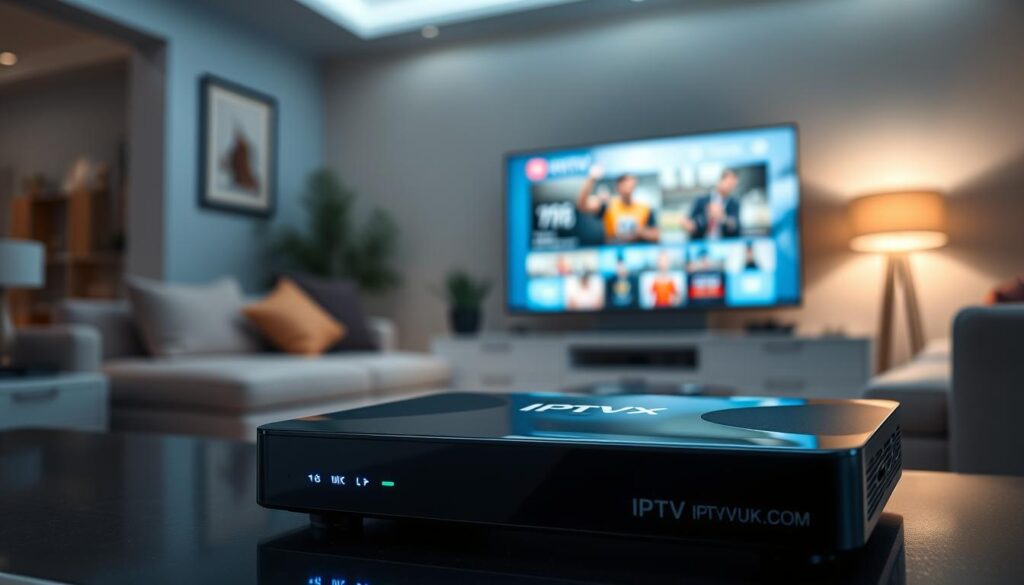
Home network considerations are vital for successful IPTV deployment. Providers must account for various connection methods, such as Ethernet, Wi-Fi, and powerline adapters, and potential bandwidth limitations within customer premises. The set-top box is a crucial piece of equipment that decodes and decrypts TV and VOD streams for display on the TV screen.
Benefits and Limitations of IPTV
As IPTV continues to grow in popularity, it’s essential to understand its benefits and limitations for both consumers and service providers. IPTV offers a modern, flexible way to enjoy television, but weighing the pros and cons is crucial before adopting this technology.
Advantages for Consumers
For consumers, IPTV provides unprecedented flexibility, allowing viewers to watch content on their own schedule rather than adhering to fixed broadcast timetables. This flexibility fundamentally changes how people consume television. The interactive features of IPTV enhance the viewing experience through electronic programme guides, content recommendations, and search functionality. Additionally, IPTV’s multi-device compatibility enables seamless switching between televisions, computers, tablets, and smartphones while maintaining viewing preferences and watchlists.
Advantages for Service Providers
Service providers benefit from IPTV’s targeted advertising capabilities, which allow for personalised ad delivery based on viewing habits, demographics, and preferences. This potentially increases advertising revenue compared to traditional broadcast models. The data analytics available through IPTV platforms give providers valuable insights into viewing patterns, popular content, and user behaviour, informing content acquisition decisions and service improvements.
| Benefits for Providers | Description |
|---|---|
| Targeted Advertising | Personalised ad delivery based on viewer habits and demographics |
| Data Analytics | Insights into viewing patterns, popular content, and user behaviour |
Potential Drawbacks and Challenges
The primary limitation of IPTV is its dependence on a reliable internet connection, with service quality directly tied to connection speed and stability. This can be problematic in areas with limited broadband infrastructure. Bandwidth consumption is another challenge, as high-definition and 4K streams require substantial data throughput, potentially leading to increased costs or hitting data caps for consumers. Technical complexity can also be a barrier to adoption for less tech-savvy users.
For a more in-depth understanding of IPTV and its benefits, you can visit https://blog.webnexs.com/what-is-iptv-the-best-guide-and-benefits-of-iptv/ to explore further details on how IPTV is revolutionising television viewing.
IPTV Market and Adoption Worldwide
The IPTV market has experienced rapid expansion, fueled by advancements in internet infrastructure and the proliferation of smart devices. This growth is evident across various regions, with different markets adopting IPTV services at varying rates.
Residential IPTV Services
Residential IPTV services have evolved significantly, transforming from basic television alternatives to sophisticated entertainment platforms. These platforms now integrate traditional channels, on-demand content, and interactive applications through user-friendly interfaces. According to Fortune Business Insights, the global IPTV market has seen substantial growth, with projections indicating a continued upward trend. The competitive landscape has forced traditional cable and satellite providers to adapt their business models, with many launching their own IPTV platforms or hybrid services.
- Integration of traditional channels and on-demand content
- User-friendly interfaces enhancing viewer experience
- Competition driving innovation among service providers
Commercial and Corporate Applications
Commercial IPTV applications extend beyond residential use, with significant deployment in hospitality, healthcare facilities, educational institutions, and corporate environments. The corporate sector utilizes IPTV for internal communications, training, digital signage, and event broadcasting across office locations. Custom platforms are designed specifically for business applications, offering tailored solutions that meet the unique needs of corporate clients. As reported by Grand View Research, the market is expected to continue growing, driven by increasing demand for these specialized services.
- Deployment in various commercial sectors
- Customized IPTV solutions for corporate needs
- Growing demand driving market expansion
Legal Considerations and Choosing Legitimate Services
As IPTV continues to grow in popularity, understanding its legal landscape becomes increasingly important. While IPTV technology itself is perfectly legal, its use has given rise to a significant gray market of unlicensed and illegal services. It is absolutely essential for consumers to understand the difference and the risks associated with using an illegitimate provider.
Copyright and Licensing Issues
The legal landscape surrounding IPTV is complex, with legitimate services operating alongside a growing number of unauthorised providers that redistribute content without proper licensing agreements. Copyright infringement represents the primary legal concern, as many illicit IPTV services capture broadcast signals from legitimate sources (cable, satellite, or other IPTV providers) and redistribute them without compensating the original content creators or rights holders. Legitimate IPTV providers, on the other hand, invest significantly in securing proper licensing agreements with content owners, television networks, film studios, and sports leagues—costs that are reflected in their subscription prices.
How to Identify Legal IPTV Providers
Consumers can identify legal IPTV services through several key indicators: transparent pricing structures, professional websites with clear terms of service, availability on major app stores, and recognisable payment methods rather than cryptocurrency or anonymous payment systems. For example, a visit to https://www.iptvvuk.com/best-iptv-providers-in-2025-features-pricing-reviews/ can provide insights into reputable IPTV providers. The content library itself often reveals legitimacy—if a service offers thousands of premium channels from multiple countries at an unusually low price (significantly below market rates for cable or satellite), it’s likely operating without proper licenses.
Using unauthorised IPTV services carries multiple risks beyond legal liability, including exposure to malware through unvetted applications, poor service reliability with no recourse for outages, and potential data security vulnerabilities. For more information on the legal status of IPTV in specific regions, readers can refer to resources such as https://www.netjoi.ca/blog/is-iptv-legal-in-canada/.
Conclusion: The Future of IPTV Technology
The IPTV landscape is shifting, with new trends emerging in content creation and distribution. As highlighted in various studies, including those found on Vodlix and Amira Labs, advancements in video compression and streaming quality are driving this change. Key trends include the integration of AI and machine learning for personalized viewing experiences, the rise of 5G networks enabling high-quality streaming on-the-go, and the blurring of lines between traditional IPTV and OTT services. As a result, consumers can expect greater personalization and more flexible content options, while providers will need to adapt to changing demands and technological advancements.