
The way we consume television content has undergone a significant transformation with the advent of Internet Protocol Television (IPTV). This technology delivers television content through internet protocols, offering users unprecedented access to global content.
However, the legality of IPTV services is often a subject of confusion. While the technology itself is perfectly legitimate, the content being distributed may not always be properly licensed.
As a user, it’s essential to understand the distinction between legitimate and illegitimate streaming services to make informed decisions about your viewing choices.
Key Takeaways
- Understand the legal frameworks governing IPTV across different regions.
- Identify the hallmarks of legitimate IPTV services.
- Learn how to navigate the IPTV landscape safely as a responsible user.
- Discover the importance of proper licensing for distributed content.
- Recognise the risks associated with illegitimate streaming services.
Understanding IPTV Technology
IPTV represents a significant shift in how television content is delivered. This technology enables the transmission of television content over internet protocols, offering a more flexible and interactive viewing experience.
What Is IPTV and How Does It Work?
IPTV, or Internet Protocol Television, is a system where television services are delivered through the internet. This approach offers several advantages, including on-demand access and interactive features. You can watch content simultaneously on multiple devices, enhancing the viewing experience. The technology enables more efficient content delivery and allows for features such as pause, rewind, and fast-forward on live television broadcasts.
The Evolution of Television Delivery
Television delivery has undergone significant changes over the years. The transition from analogue to digital broadcasting laid the groundwork for IPTV by converting television signals into digital data. Modern IPTV represents the convergence of broadcasting and internet technologies, allowing content to be delivered on-demand. Key developments include:
- The evolution from limited terrestrial broadcasts to sophisticated internet-based streaming services.
- The transition from analogue to digital broadcasting, enabling the conversion of television signals into digital data.
- Traditional cable and satellite services being challenged by IPTV solutions offering greater flexibility and potentially lower costs.
IPTV: Is It Legal? Addressing the Core Question
The legality of IPTV services hinges on a crucial distinction between the technology itself and how it’s used to distribute content. IPTV, or Internet Protocol Television, is a method of delivering television content over the internet, rather than through traditional terrestrial, satellite, or cable formats.
The Technology vs. The Content Distribution
The technology behind IPTV is neutral; it’s essentially a platform for delivering content. The legality issues arise when we consider the type of content being distributed and how it’s obtained. Legitimate IPTV providers obtain the necessary licensing rights for the content they stream, while illegal services do not.
To understand this better, consider the following key points:
- The technology itself is not illegal; it’s how it’s used that matters.
- Content distribution is where legal issues typically arise.
- Legitimate providers negotiate complex licensing agreements with content owners.

Copyright Laws and Content Licensing
Copyright laws form the legal foundation that determines IPTV service legitimacy. These laws protect the intellectual property rights of content creators and distributors. For an IPTV service to be legal, it must comply with these laws by obtaining proper licensing for the content it distributes.
Key aspects of copyright laws and content licensing include:
- Copyright protection extends to original creative works, including TV shows, movies, and live sports.
- Legitimate IPTV providers must negotiate licensing agreements, often paying substantial fees.
- Licensing agreements specify geographical restrictions, time limitations, and platform constraints.
- Copyright enforcement is becoming increasingly sophisticated, targeting services that facilitate content piracy.
By understanding these aspects, you can make informed decisions about the IPTV services you choose to use.
Legal vs. Illegal IPTV Services: Critical Distinctions
As IPTV continues to grow in popularity, distinguishing between legal and illegal services becomes increasingly important. You need to be aware of the risks associated with illegal IPTV services to protect yourself and your devices.
Characteristics of Legitimate IPTV Providers
Legitimate IPTV service providers operate transparently, offering clear information about their services, including licensing agreements and business registration details. They provide reasonable pricing that reflects the cost of licensing content. When choosing an IPTV service, look for providers that have transparent business operations and proper licensing.
A legitimate IPTV service will have:
- Clear business registration and contact information
- Licensing agreements for the content they provide
- Reasonable pricing that aligns with industry standards
- Transparent terms of service and privacy policies
Warning Signs of Unauthorised IPTV Services
When evaluating an IPTV service, be cautious of providers that exhibit certain warning signs. These may include:
- Offering vast content libraries at suspiciously low prices
- Lacking transparent business information or proper registration
- Encouraging the use of VPNs to “avoid detection”
- Requesting payment through untraceable methods like cryptocurrencies
Such services are likely to be illegal IPTV providers, posing significant risks to users, including exposure to copyright infringement issues and potential cybersecurity threats. Always be on the lookout for these warning signs when selecting an IPTV service provider.
Top Legal IPTV Services in 2024

In 2024, several IPTV services stand out for their commitment to legality and quality content delivery. When selecting a legal IPTV service, it’s essential to consider factors such as content variety, pricing, and additional features. Here, we explore some of the top legal IPTV services available.
Fubo TV
Fubo TV is a popular choice for sports enthusiasts, offering a comprehensive range of sports channels alongside entertainment and news networks. With a focus on live sports, Fubo TV is an excellent option for those looking for a traditional TV replacement.
YouTube TV
YouTube TV provides a robust IPTV experience with access to a wide array of live TV channels, including major networks and sports channels. Its user-friendly interface and generous cloud DVR storage make it a compelling choice for cord-cutters.
Sling TV
Sling TV offers a flexible IPTV solution with customizable channel packages, allowing users to tailor their viewing experience to their preferences. It’s an excellent option for those looking for affordability and flexibility.
Generate an image showing Sling TV’s channel packages
Hulu + Live TV and Other Legal Options
Hulu + Live TV offers a compelling combination of traditional IPTV service with a robust on-demand streaming library, effectively merging two entertainment models. The service includes over 85 live channels alongside Hulu’s extensive on-demand library of current shows, classic series, and original programming not available on traditional television. Subscribers also receive bundled access to Disney+ and ESPN+, creating an exceptionally comprehensive content package that spans live sports, news, entertainment, and exclusive streaming content. For more information on the best IPTV services, you can visit our review page at https://www.iptvvuk.com/best-iptv-services-in-2025-top-providers-reviewed/.
Other legitimate options include Philo, which offers a budget-friendly package with a focus on lifestyle and entertainment channels; Pluto TV, a free, ad-supported legal IPTV service; and network-specific services like Paramount+ and Peacock, which combine live channels with on-demand libraries. All these services operate with proper licensing agreements, ensuring content creators receive appropriate compensation for their work.
Generate an image representing various legal IPTV services
The Legal Framework Governing IPTV
IPTV operates within a sophisticated legal framework that encompasses international copyright protections and stringent licensing agreements. Understanding this framework is crucial for both IPTV service providers and users to ensure compliance with the law.
International Copyright Protections
International copyright protections form a critical component of the legal framework governing IPTV. These protections are enforced through various treaties and agreements between countries, ensuring that content creators’ rights are safeguarded across borders.
- Copyright laws vary by country but generally protect original works, including television programs and movies distributed through IPTV services.
- International treaties, such as the Berne Convention, facilitate the protection of copyrights across different jurisdictions.
- IPTV service providers must comply with these laws by obtaining necessary licenses for the content they distribute.
Licensing Requirements and Distribution Rights
Licensing requirements and distribution rights are pivotal in the IPTV ecosystem, determining what content can be delivered, to whom, and through which platforms.
For IPTV licensing and rights for distribution, operate through exclusive agreements between content owners and authorized distributors. These agreements specify geographical regions, periods, and distribution platforms, often costing millions of dollars.

- Content licensing for IPTV distribution involves complex multi-tiered agreements specifying how, when, and where programming can be distributed.
- These agreements include geographical restrictions (geo-blocking), limiting distribution to specific countries or regions.
- Temporal restrictions determine when content becomes available for streaming after initial broadcast or theatrical release.
- Distribution platform limitations may specify which devices or technologies can be used to deliver content.
Violating these licensing terms constitutes copyright infringement, emphasizing the importance of compliance for IPTV service providers.
IPTV Legality Across Different Regions
The legality of IPTV services varies significantly across different regions and countries. Understanding these differences is crucial for both providers and users to ensure compliance with local laws and regulations.
Regulations in the United Kingdom and European Union
In the United Kingdom and European Union, IPTV services are subject to copyright laws and regulations. The EU has implemented directives to harmonize copyright protection across member states, affecting how IPTV services operate. For instance, the EU’s Copyright Directive has provisions that impact how IPTV services distribute copyrighted content. Providers must obtain necessary licenses and comply with local copyright laws to operate legally.
Copyright infringement is taken seriously, and illegal IPTV services can face significant penalties. Users should be cautious when selecting IPTV services, ensuring they choose providers that comply with local regulations.
Perspectives in the United States, Canada, and Globally
In the United States, IPTV legality is governed by strict copyright enforcement through legislation like the Digital Millennium Copyright Act (DMCA). The Alliance for Creativity and Entertainment (ACE) actively pursues legal action against illegal IPTV services, leading to significant lawsuits and service shutdowns. Penalties for operators can include substantial fines and prison sentences, while users may face service termination and potential legal action.
Canada implements a “notice-and-notice” system under its Copyright Modernization Act, requiring Internet Service Providers to forward copyright infringement warnings to subscribers. Globally, there’s increasing international cooperation to address IPTV piracy, with countries like Australia and New Zealand implementing site-blocking legislation. 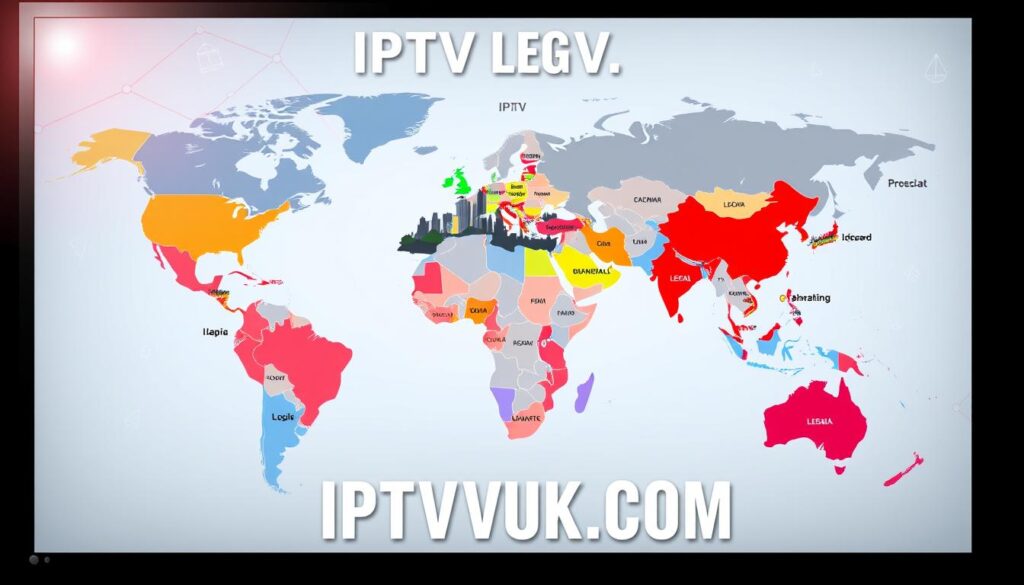
Understanding these regional differences is key to navigating the complex landscape of IPTV legality. As the industry evolves, staying informed about local laws and regulations will be crucial for both IPTV service providers and users.
Risks and Consequences of Using Illegal IPTV
The dangers of using illegal IPTV services extend beyond mere inconvenience, impacting users’ financial and personal security. As we explore the risks associated with these services, it becomes clear that the consequences can be severe.
Legal Ramifications for Users
Using illegal IPTV services can lead to legal repercussions for users. In many jurisdictions, accessing copyrighted content without proper authorization is considered a violation of copyright laws. For instance, in the United States, copyright infringement can result in fines ranging from $750 to $150,000 per infringed work. Moreover, internet service providers (ISPs) may also take action against users suspected of using illegal streaming services, potentially resulting in warnings, fines, or even throttling of internet speeds.
“Piracy is not a victimless crime. It harms the entire ecosystem of content creation, from creators to distributors.”
Cybersecurity and Privacy Vulnerabilities
Illegal IPTV services often expose users to significant cybersecurity risks. These services may bundle malware or adware with their applications, compromising users’ devices and personal data. Furthermore, many illegal IPTV providers operate with little regard for user privacy, potentially selling or sharing sensitive information without consent. To mitigate these risks, users should consider employing robust cybersecurity measures, such as using reputable VPN services and keeping their devices updated with the latest security patches.
Service Quality and Reliability Concerns
The service quality of illegal IPTV providers is often subpar compared to legitimate alternatives. Users may experience frequent buffering, poor video resolution, and inconsistent content updates. A comparison of service quality between legal and illegal IPTV services is illustrated in the table below:
| Feature | Legal IPTV Services | Illegal IPTV Services |
|---|---|---|
| Streaming Quality | High-definition (HD) or 4K | Variable, often low quality |
| Buffering Frequency | Low | High |
| Content Updates | Regular and consistent | Inconsistent, often delayed |
| Customer Support | Available and responsive | Limited or non-existent |
For a more reliable and high-quality streaming experience, users are advised to opt for legal IPTV services. Providers like those reviewed on IPTV UK offer a range of channels and on-demand content with robust customer support and consistent service quality.
How to Identify and Choose Legal IPTV Services
To ensure a safe and legal streaming experience, it’s crucial to choose an IPTV service wisely. With the increasing popularity of IPTV, distinguishing between legitimate and illegal services has become more important than ever.
Pricing Structures and Reasonable Costs
One of the primary indicators of a legal IPTV service is its pricing structure. Legitimate providers typically offer competitive and reasonable pricing. For instance, services like Fubo TV and YouTube TV provide various subscription plans that cater to different user needs. Be wary of services that offer extremely low prices or ‘too-good-to-be-true’ deals, as they might be operating illegally.
| IPTV Service | Monthly Cost | Channels Offered |
|---|---|---|
| Fubo TV | $59.99 | Over 160 channels |
| YouTube TV | $64.99 | Over 85 channels |
| Sling TV | $35-$50 | Varied channel lineups |
Transparency in Business Operations
Legal IPTV services maintain transparency in their business operations. They clearly outline their terms of service, privacy policies, and contact information. You can visit their official websites to verify this information. For example, a legitimate IPTV service will have a clear and accessible customer support system.
Content Libraries and Licensing Verification
A legitimate IPTV service will have a well-curated content library, reflecting proper licensing agreements. You can verify the licensing legitimacy by checking if the service is an authorised partner of major content producers. Most networks list their official distribution partners on their websites. For more information on IPTV legality, you can refer to resources like https://www.lemmymorgan.com/is-iptv-legal/.
Some key characteristics of legal IPTV services include:
- Consistent channel offerings rather than frequently changing lineups.
- Content organisation that reflects proper licensing agreements, with regional restrictions appropriately applied.
- Integration with other legal streaming services rather than promising to include their content directly in violation of exclusive distribution agreements.
- Consistent on-demand libraries with proper metadata, thumbnails, and descriptions.
By considering these factors, you can make an informed decision when choosing an IPTV service, ensuring a safe and enjoyable streaming experience.
Best Practices for Safe IPTV Usage
With the rise of IPTV, users must be aware of the best practices to ensure a secure and enjoyable streaming experience. As IPTV continues to evolve, it’s crucial to understand how to navigate its legal and technical aspects safely.
Protecting Your Devices and Personal Data
When using IPTV services, protecting your devices and personal data is paramount. Legitimate IPTV services will have robust security measures in place. However, users must also take responsibility for their security by using strong passwords and keeping their devices updated.
- Use reputable antivirus software to protect against malware.
- Regularly update your IPTV app and devices to prevent vulnerabilities.
- Be cautious of phishing attempts that could compromise your personal data.
For more information on securing your IPTV experience, you can visit https://www.astrill.com/blog/vpn-for-iptv/ to learn about using VPNs with IPTV.
Understanding VPN Limitations with IPTV
Using a VPN (Virtual Private Network) can enhance your privacy and security while streaming IPTV content. However, it’s essential to understand that VPNs do not make illegal streaming legal. They merely mask your IP address, providing a layer of privacy.
| VPN Feature | Description | Benefit for IPTV Users |
|---|---|---|
| Encryption | Encrypts your internet connection | Protects your streaming activity from ISP monitoring |
| IP Masking | Masks your IP address | Enhances privacy and can bypass geo-restrictions |
| Security | Provides secure connection protocols | Reduces risk of data breaches and cyber threats |
As highlighted by a cybersecurity expert, “Using a VPN is a step towards securing your online activities, but it is not a license to engage in illegal activities.” It’s crucial to choose a reputable VPN service that aligns with your IPTV usage needs.
Conclusion
Understanding the legal landscape of IPTV is essential for making informed choices about streaming services. IPTV technology itself is legal, but content distribution determines its legitimacy. To ensure a safe and reliable viewing experience, users must choose licensed IPTV services.
Legitimate providers like Netflix and Hulu offer high-quality streaming while supporting content creators. In contrast, illegal IPTV services expose users to malware, data theft, and poor quality. By selecting verified providers with transparent practices, you protect yourself legally and financially. For more detailed information on IPTV regulations, you can visit academic resources that provide in-depth analysis.
As the IPTV landscape evolves, legitimate services continue to improve, making legal options increasingly attractive. This guide encourages users to prioritize both security and legal compliance when choosing IPTV services.