
IPTV, or Internet Protocol Television, represents a modern alternative to traditional cable television, delivering content via internet protocols rather than conventional broadcast methods. This allows users to access live TV and on-demand content through their internet connection, providing a flexible and potentially cost-effective solution for entertainment needs.
To utilise IPTV services, you’ll typically need to choose a reputable provider and download a compatible app or player onto your streaming device. With a range of options available, it’s essential to understand the different types of IPTV services and how to access them legally.
Key Takeaways
- Understand the different types of IPTV services available.
- Learn how to choose a reputable IPTV provider.
- Discover the essential requirements for setting up IPTV.
- Explore the benefits of using IPTV for entertainment needs.
- Find out how to access IPTV services legally.
Understanding IPTV: What It Is and How It Works
IPTV, or Internet Protocol Television, is revolutionizing the way we consume television content by delivering it through internet connections rather than traditional broadcast methods. This shift offers numerous benefits and changes the landscape of television viewing.
Definition and Basic Concept of IPTV
IPTV is a service that allows users to stream television content directly to their devices via the internet. Unlike traditional cable or satellite TV, IPTV uses your internet connection to deliver content, providing a more flexible viewing experience. This means you can watch your favorite shows and movies on various devices, including smart TVs, smartphones, and laptops, as long as you have a stable internet connection.
Different Types of IPTV Services
There are several types of IPTV services available, catering to different viewer preferences. These include live TV, which allows you to watch broadcasts in real-time; on-demand content, where you can choose what to watch and when; and catch-up TV, enabling you to watch previously aired content. Some IPTV services also offer additional features like cloud recording and multi-device synchronization, enhancing the viewing experience further.
Advantages Over Traditional Cable TV
IPTV offers several advantages over traditional cable TV. For instance, it provides greater flexibility, allowing you to watch content on your schedule rather than adhering to a broadcast timetable. Additionally, IPTV eliminates the need for bulky hardware like set-top boxes and satellite dishes, making it a more streamlined option. The cost is also a significant factor, with many IPTV services offering competitive pricing models that undercut traditional cable packages.
Some key benefits of IPTV include:
- Watching live or on-demand TV whenever it suits you, offering a more personalized viewing experience.
- Streaming content directly on your device without the need for satellites, antenna, or set-top box.
- Accessing IPTV on various devices, including smart TVs, smartphones, tablets, or laptops, making it a versatile option.
By understanding how IPTV works and its various benefits, you can make an informed decision about whether this modern TV solution is right for you.
Legal IPTV Options Available in the Market
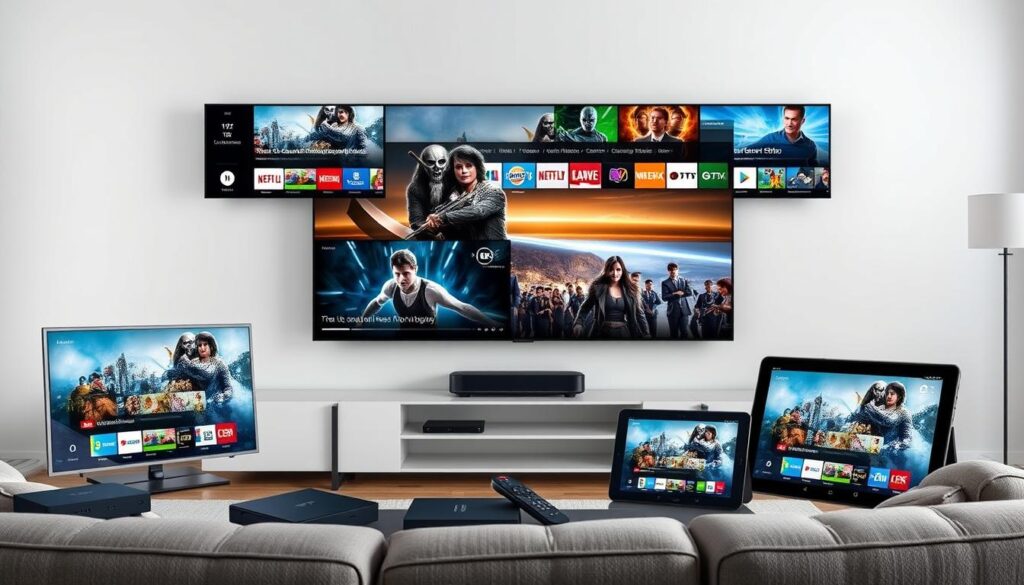
Legal IPTV options have proliferated, providing consumers with a range of choices tailored to different viewing preferences. When selecting an IPTV service, it’s essential to consider the type of content you want to access and the devices you use.
Subscription-Based IPTV Services
Subscription-based IPTV services offer a wide range of channels and on-demand content for a monthly or annual fee. These services often provide high-quality streams and a user-friendly interface. Some popular subscription-based IPTV services include IPTV subscription services that offer a mix of live TV, catch-up TV, and on-demand content.
When choosing a subscription-based IPTV service, consider the channel lineup, content offerings, and pricing to ensure it meets your viewing needs.
Free IPTV Platforms
Free IPTV platforms offer a limited selection of channels and content without a subscription fee. These platforms often rely on advertising revenue to support their service. While free IPTV platforms can be a cost-effective option, the content selection may be limited, and stream quality can vary.
Hybrid IPTV Solutions
Hybrid IPTV solutions combine traditional broadcasting methods with internet-delivered content, offering viewers the best of both worlds. These services often integrate over-the-air channels with streaming content, creating comprehensive entertainment packages. The benefits of hybrid IPTV solutions include:
- Combining traditional broadcasting with internet-delivered content
- Offering redundancy in content delivery
- Providing a gradual migration path from traditional TV to streaming services
By leveraging both traditional and internet-based content delivery, hybrid IPTV solutions can provide a more robust and flexible viewing experience.
Essential Requirements for How Do You Get IPTV
Before diving into the world of IPTV, it’s essential to know what you need to get started. To enjoy IPTV, you must have a few key components in place to ensure a smooth and enjoyable viewing experience.
Internet Connection Requirements
A stable and fast internet connection is crucial for IPTV. Most IPTV services recommend a minimum internet speed of 5 Mbps for standard definition (SD) content, 10 Mbps for high definition (HD), and 25 Mbps or more for 4K content. Ensuring your internet plan meets these requirements will help prevent buffering and ensure a quality stream.
Compatible Devices for IPTV
IPTV can be accessed on various devices, including Smart TVs, smartphones, tablets, and dedicated IPTV set-top boxes. While many modern devices support IPTV natively, a dedicated set-top box often provides more frequent software updates, specialized features, and superior performance. Choosing the right device depends on your viewing preferences and the level of functionality you desire.
Additional Hardware Considerations
Beyond the primary device, other hardware can enhance your IPTV experience. For instance, external storage devices can be used with compatible set-top boxes or Smart TVs to record content for offline viewing. Moreover, the quality of your network equipment, such as routers and mesh network systems, significantly impacts streaming performance. Higher-end routers provide better signal strength and more consistent connections, while mesh systems can eliminate Wi-Fi dead zones in larger homes.
| Device | Key Features | Benefits |
|---|---|---|
| Smart TV | Integrated IPTV apps, 4K resolution | Convenience, wide screen viewing |
| Dedicated Set-top Box | Frequent software updates, specialized IPTV features | Enhanced performance, regular updates |
| Mesh Network System | Whole-home Wi-Fi coverage | Eliminates Wi-Fi dead zones, consistent connectivity |
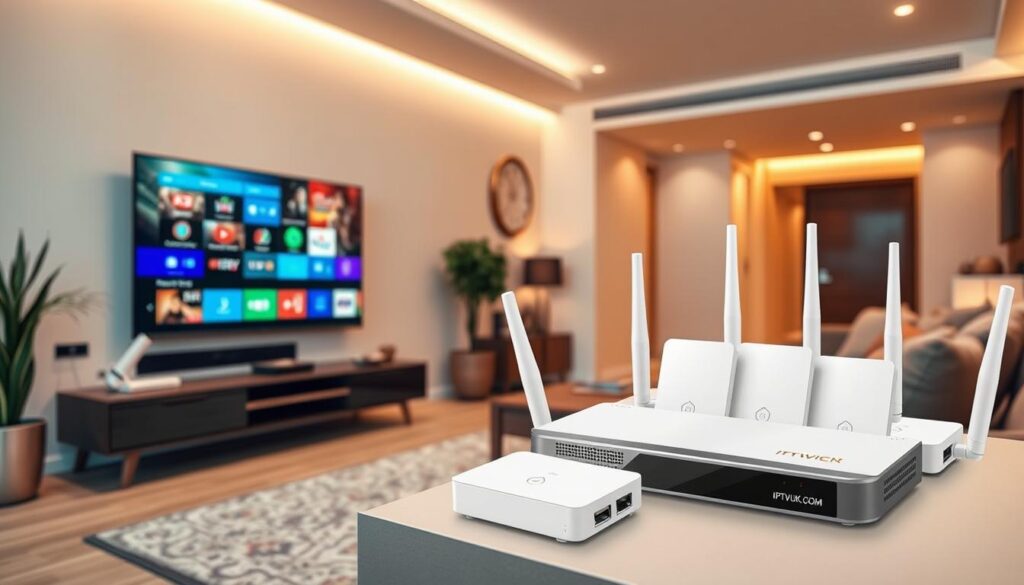
As highlighted by industry experts, “The quality of your viewing experience is directly tied to the quality of your equipment and internet connection.” Ensuring you have the right hardware and a robust internet connection is key to enjoying IPTV to its fullest potential.
Setting Up IPTV on Different Devices
To enjoy IPTV, you need to configure it on your preferred device, whether it’s a smart TV, streaming device, or smartphone. The setup process varies slightly depending on the device you’re using, but overall, it’s a relatively straightforward process.
Smart TVs
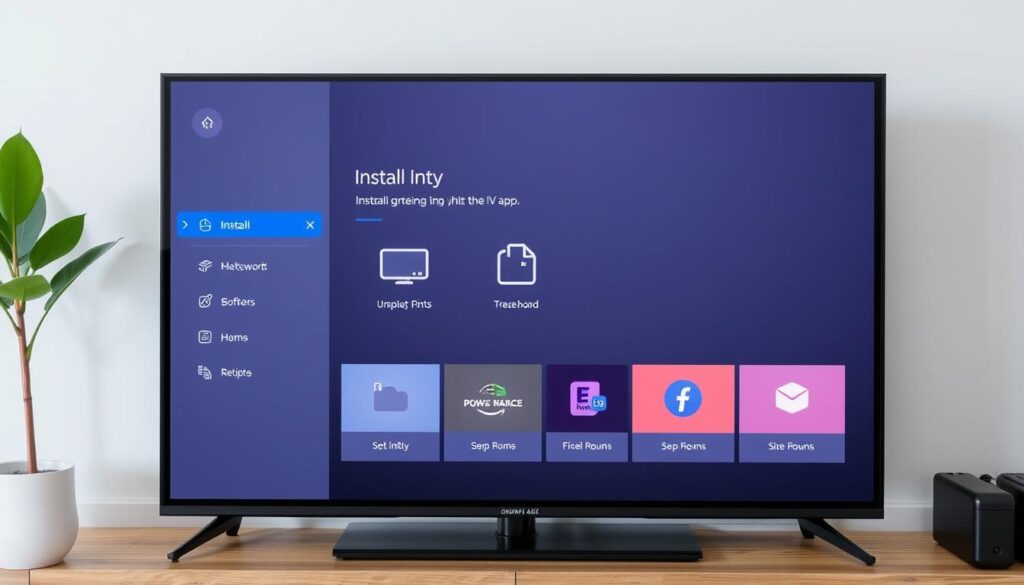
For smart TVs, the IPTV setup is typically done through an app available on the TV’s app store. You can search for your IPTV service provider’s IPTV app and install it directly. For example, some smart TVs support IPTV installation through their native apps.
Streaming Devices (Fire Stick, Roku, Apple TV)
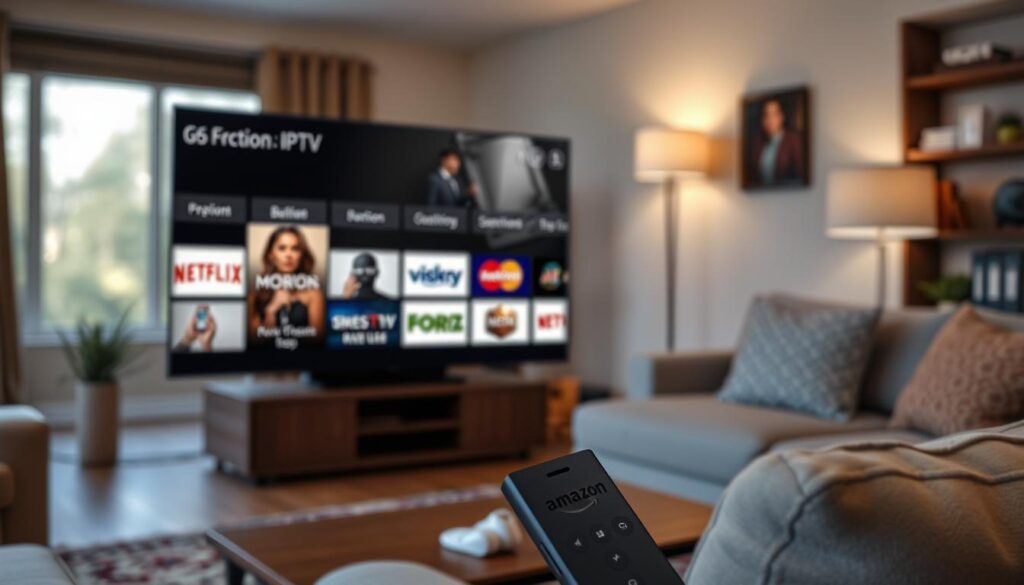
Streaming devices like Amazon Fire Stick, Roku, and Apple TV offer a wide range of IPTV apps. To set up IPTV on these devices, navigate to their respective app stores, search for the IPTV app, and download it. For instance, on Amazon Fire Stick, you can find various IPTV apps by searching in the app store. Understanding IPTV can help you make the most of your streaming device.
Smartphones and Tablets
On smartphones and tablets, IPTV services are usually accessed through dedicated apps available on the App Store for iOS devices or Google Play Store for Android devices. Simply search for your IPTV service provider’s app, download, and install it to start streaming.
Computers and Laptops
Computers and laptops provide multiple options for accessing IPTV services, including dedicated applications, web-based interfaces, and media player software with IPTV capabilities. For Windows users, popular IPTV applications include VLC Media Player and Kodi. Mac users can access IPTV through apps like VLC and Kodi, available through the App Store or developer websites. If your IPTV service doesn’t have an app for your computer, you can access it through your browser, providing a consistent connection to your IPTV account. For more details on transferring IPTV subscriptions to new devices, you can refer to this step-by-step guide.
Using IPTV Players and Applications

Using the right IPTV player or app is crucial for a seamless viewing experience. IPTV players and applications enable you to stream your favourite channels and content directly to your devices.
Popular IPTV Players Explained
Several IPTV players are available, each with its unique features and compatibility. Some of the most popular IPTV players include those that support M3U playlists and offer user-friendly interfaces. For instance, you can learn how to use IPTV with a compatible player.
Adding Channels and Playlists to Your IPTV App
To add channels to your IPTV app, you typically need to input an M3U playlist URL provided by your IPTV service provider. This URL contains information about available channels and their streaming sources. Ensure that the playlist format is compatible with your chosen IPTV player. You can also visit IG IPTV for more information on setting up IPTV channels.
The process involves navigating to the playlist section within the app, where you can either paste the URL or import a file containing the channels. Most IPTV apps feature a dedicated settings or configuration section for entering playlist details, often requiring both the M3U playlist URL and an EPG (Electronic Programme Guide) URL for programme information.
- Adding channels to IPTV applications typically involves inputting an M3U playlist URL provided by your IPTV service provider.
- Many advanced IPTV players support adding multiple playlists simultaneously, allowing you to combine channels from different providers.
- Manual channel organisation features enable users to create custom groups and favourites lists.
Troubleshooting Common IPTV Issues
Common problems with IPTV can often be resolved with simple troubleshooting steps. IPTV issues can range from buffering and streaming quality problems to channel access and app compatibility issues.
Buffering and Streaming Quality Problems
Buffering and poor streaming quality are often related to internet connection speeds. Ensuring a stable and fast connection can resolve these issues. You can check here for more detailed guidance on fixing IPTV buffering with VPN settings.
Channel Access and Playlist Issues
Channel access problems can arise from incorrect playlist settings or outdated app versions. Checking the settings and ensuring the app is updated can often resolve these issues. For more information on troubleshooting IPTV issues, visit TVonAir.
App and Device Compatibility Problems
App and device compatibility issues can occur when the IPTV app is not optimized for your device. Ensuring your device meets the app’s requirements or using an alternative app can help. As the saying goes, “A smooth stream is just a setting away.” Some key features to look for in an IPTV app include ease of use and compatibility with various devices. Always review the terms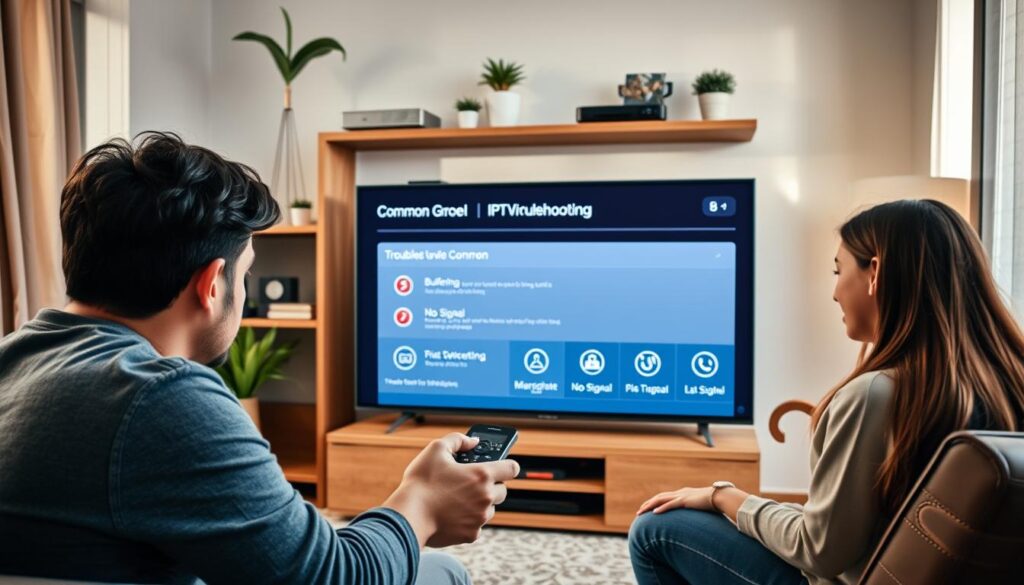
Conclusion
In conclusion, IPTV represents a significant shift in how we access and enjoy television content, providing a more tailored experience for modern viewers. By understanding what IPTV is and how it works, you can make informed decisions about your viewing options.
Whether you opt for a subscription-based service or a free platform, the key to a seamless IPTV experience lies in a reliable internet connection and choosing the right IPTV service for your needs. With the right setup and a bit of troubleshooting know-how, you can enjoy high-quality streaming on various devices.
As you’ve learned, setting up IPTV is straightforward, and with the flexibility it offers, it’s an attractive way to consume television content in today’s digital age.